




Label History from 1963 to 1980s
(Update: 30th January 2025)
Note: *Click on the label pictures to view larger images.
| Date | Release Album | Label | Comments | |
| Mono | Stereo | |||
| March 1963 -- April 1963 |
|
 |
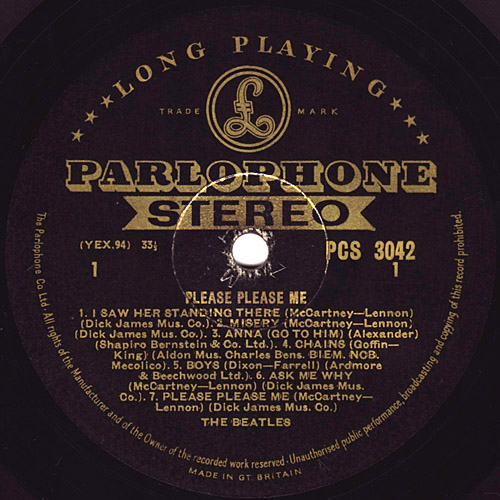 |
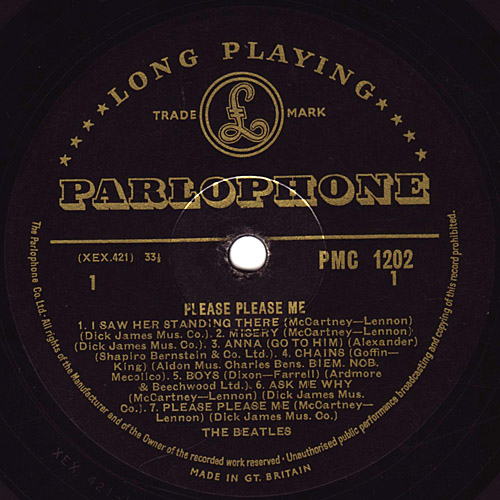
Black Parlophone label with gold ink: "LONG PLAYING" is curved across the top of the label. There are two variations of both the mono and stereo copies of these gold/black labels, due to an error by George Martin. |
| April 1963 -- Summer 1963 |
|
 |
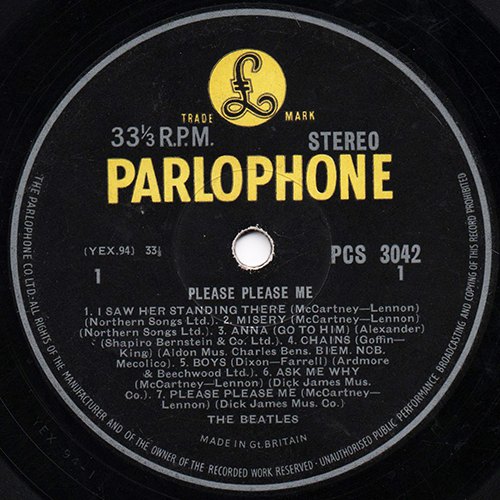 |
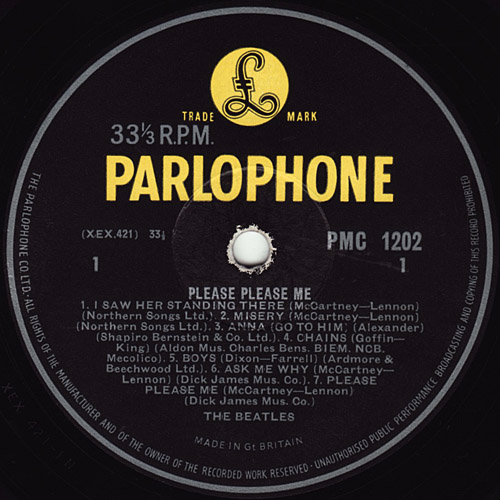
Black/yellow Parlophone label with silver print Type-1: The LP was issued with a new label style. The bold name PARLOPHONE across the top would be made in bright yellow by the summer of 1963. The remaining surface was no longer printed using gold ink, but now silver ink. The statement "RECORDING FIRST PUBLISHED 1963" was not yet added to the labels. You may notice that this type has the text "33 1/3" next to the matrix number on the left side of the label. |
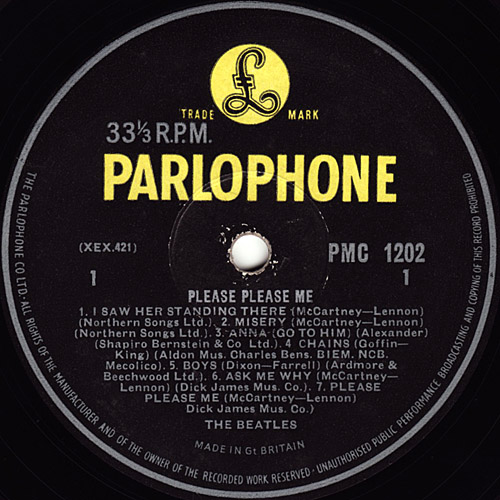 |
 Sorry, I don't have this label. |
Black/yellow Parlophone label with silver print Type-2: The statement "RECORDING FIRST PUBLISHED 1963" was not yet added to the labels. The text "33 1/3" next to the matrix number on the left side of the label was removed. |
||
| Summer 1963 -- January 1964 |
|
 |
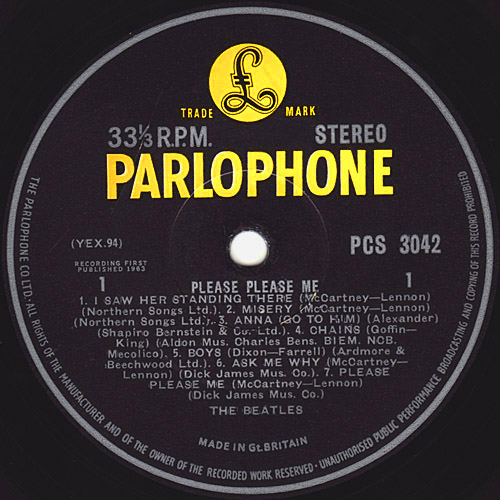 |
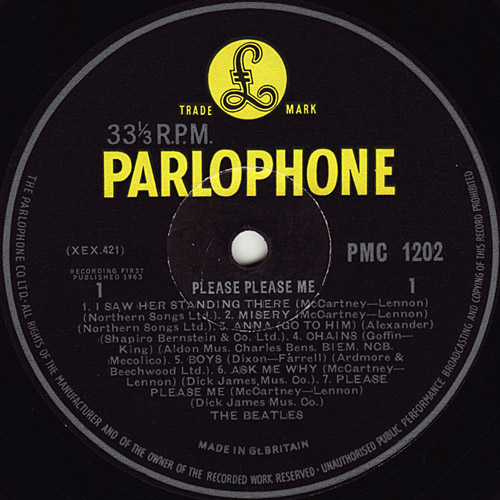
Black/yellow Parlophone label with silver print Type-3: Through the rest of 1963, from about early summer onward, the LPs had the "RECORDING FIRST PUBLISHED 196X" statement. And the outer rim of the labels were always fully capitalized, with the name "THE PARLOPHONE CO. LTD." |
| The "SOLD IN U.K. SUBJECT TO RESALE PRICE CONDITIONS, SEE PRICE LISTS" statement was introduced in February 1964 on all EMI singles, EPs and LPs. | ||||
| February 1964 -- late 1964? |
|
 |
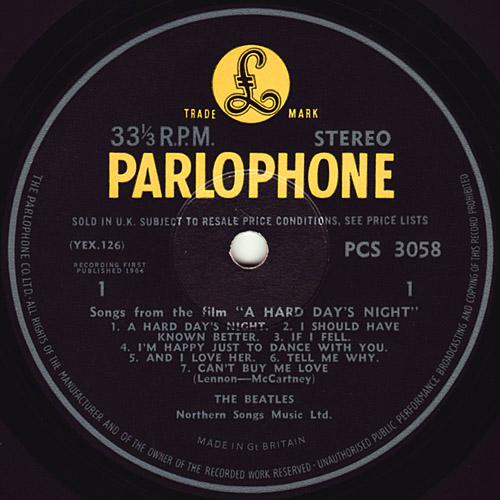 |
Black/yellow Parlophone label with silver print Type-4: The LPs had an outer rim reading "THE PARLOPHONE CO. LTD.", the "SOLD IN U.K." remark, and the "RECORDING FIRST PUBLISHED 196X" statement, on all the first pressings. |
| late 1964? -- June 1965 |
|
NONE ? | 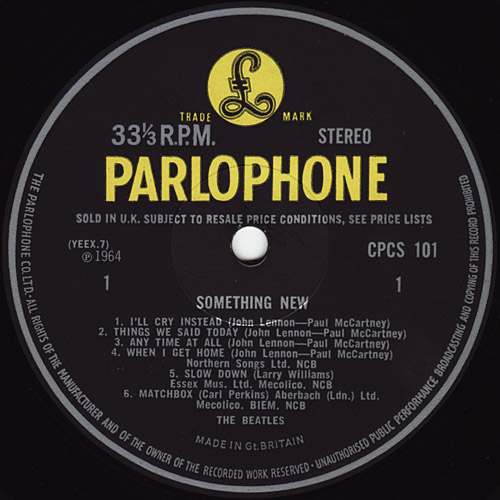 |
Black/yellow Parlophone label with silver print Type-5-1: The LPs had an outer rim reading "THE PARLOPHONE CO. LTD.", the "SOLD IN U.K." remark, but the "RECORDING FIRST PUBLISHED 196X" statement was replaced by a symbol, "(P)". *"A Hard Day's Night/PCS 3058" and "Something New/CPCS 101" |
| NONE? | 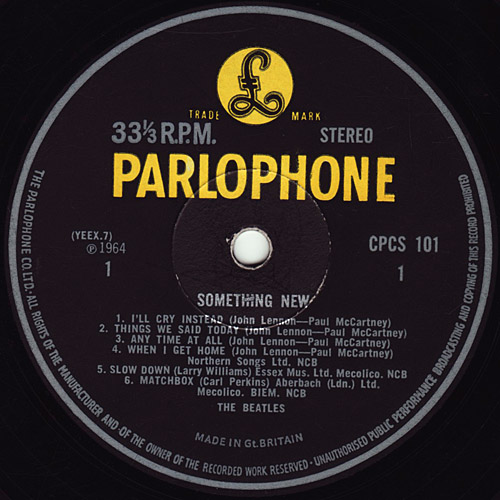 |
Black/yellow Parlophone label with silver print Type-5-2: The LPs had an outer rim reading "THE PARLOPHONE CO. LTD." The "SOLD IN U.K." remark was removed, and the "RECORDING FIRST PUBLISHED 196X" statement was replaced by a symbol, "(P)". |
||
| The outer rim statement on label was changed to "THE GRAMOPHONE CO. LTD." | ||||
| July 1965 -- Summer 1969 |
|
 |
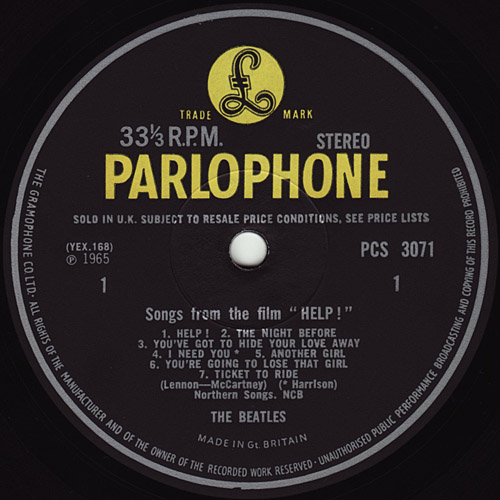 |
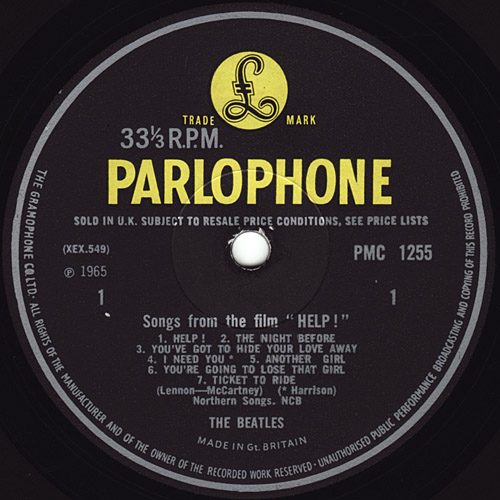
Black/yellow Parlophone label with silver print Type-6-1: When "Help!" was issued, the change took place on the label which are common to all EMI records: the outer rim statement, which previously read "THE PARLOPHONE CO. LTD.", now read "THE GRAMOPHONE CO. LTD." The "SOLD IN U.K." and the symbol "(P)196X" notice stayed intact. A large "33 1/3 R.P.M." logo was printed above the PARLOPHONE logo. |
| NONE ? |  Sorry, I don't have this label. |
Black/yellow Parlophone label with silver print Type-6-2: the outer rim statement, which previously read "THE PARLOPHONE CO. LTD.", now read "THE GRAMOPHONE CO. LTD." The "SOLD IN U.K." and the symbol "(P)196X" notice stayed intact. A small "33 1-3 R.P.M." logo was printed above the PARLOPHONE logo instead of a "33 1/3 R.P.M." logo. |
||
 |
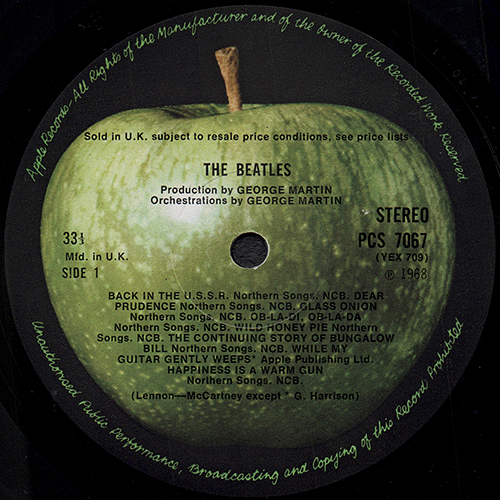 |
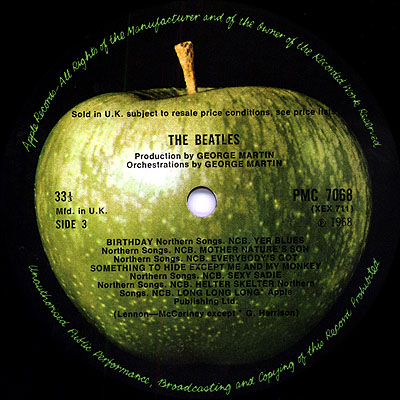
Apple label Type-1: The first pressing, issued in November 1968, has a dark apple label with the "Sold in U.K ..." text located at the top. Released in stereo and mono. The "An E.M.I. Recording" credit was not yet printed on the label. |
||
| Under Preparation | 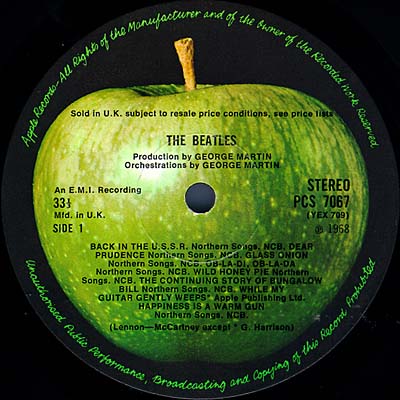 |
Apple label Type-2: The second pressing has a dark apple label, with the "Sold in U.K ..." text located at the top and the "An E.M.I. Recording" text located on the left. Released in stereo and mono. |
||
|
 |
 |
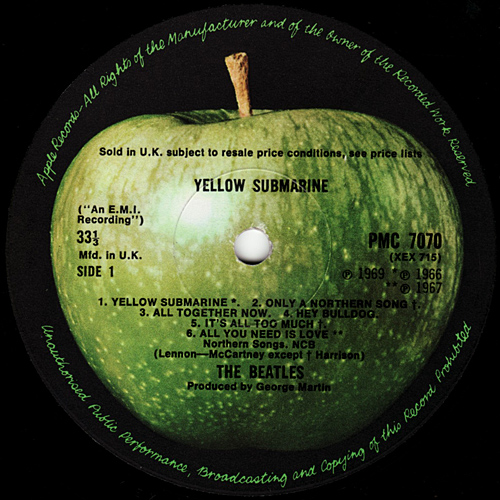
Apple label Type-3: The third pressing has a dark apple label, with the "Sold in U.K ..." text located at the top and the "("An E.M.I. Recording")" text located on the left. Released in stereo and mono. |
|
| The "SOLD IN U.K. SUBJECT TO ..." statement was removed. | ||||
| Summer 1969 -- Late 1969 |
|
 |
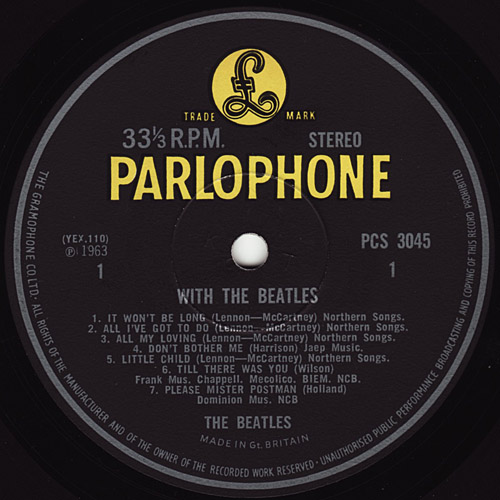 |
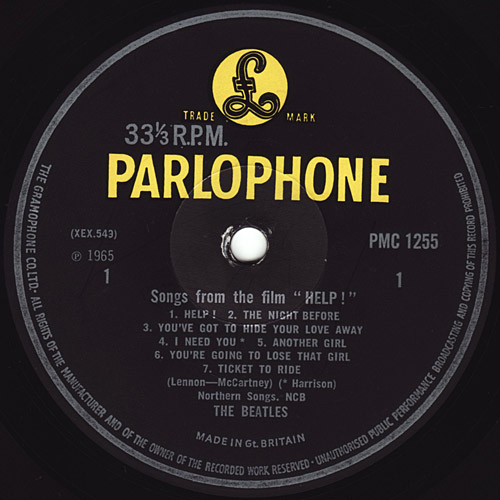
Black/yellow Parlophone label with silver print Type-7-1: The name "THE GRAMOPHONE CO. LTD." statement and the symbol "(P)196X" notice stayed intact. But the "SOLD IN U.K." statement was removed. A large "33 1/3 R.P.M." logo was printed above the PARLOPHONE logo. |
| NONE ? | 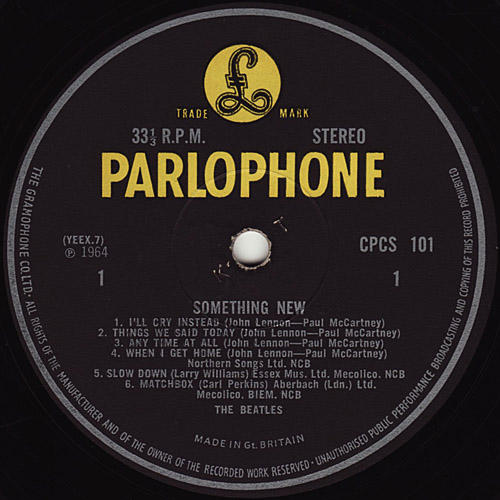 |
Black/yellow Parlophone label with silver print Type-7-2: The name "THE GRAMOPHONE CO. LTD." statement and the symbol "(P)196X" notice stayed intact. But the "SOLD IN U.K." statement was removed. A small "33 1-3 R.P.M." logo was printed above the PARLOPHONE logo instead of a "33 1/3 R.P.M." logo. |
||
| NONE ? |
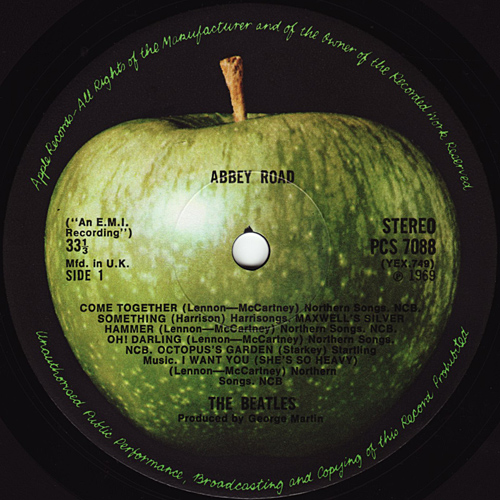 |
Apple label Type-4: The 4th pressing has a dark green apple with "("An E.M.I. Recording")", without "Sold in U.K ..." label text located on the left. Released in stereo only (maybe). |
||
| Very Late 1969 -- Mid-to-late 1970 |
|
 |
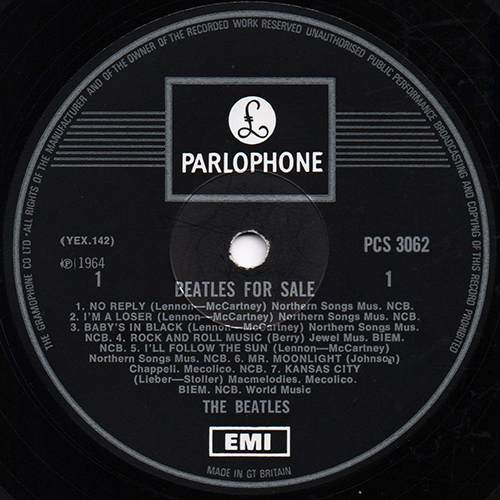 |
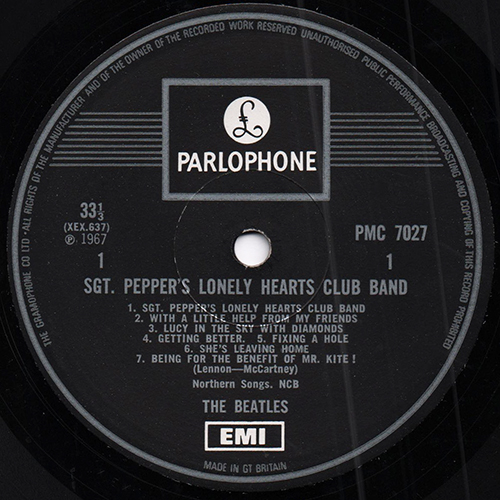
Black Parlophone label with silver print Type-1-1: In very late 1969 a new label was made, using silver ink on black, and with EMI, PARLOPHONE logo all in silver. New Beatles' LPs were on Apple label, but the nine older Parlophone LPs were pressed on this label, both in mono and stereo. Notice there is only one "EMI" mark on the label. "MONO" or "STEREO" indicator was not printed on the label. |
| NONE? |
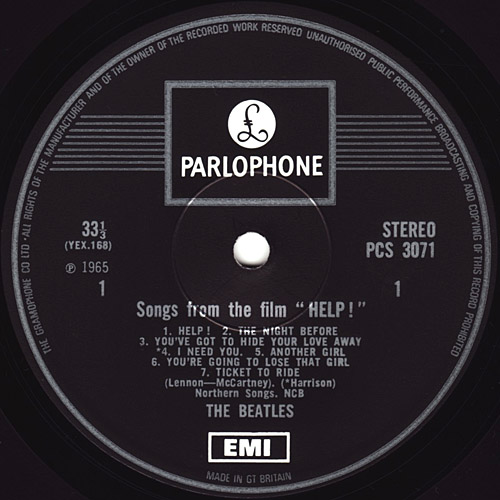 |
Black Parlophone label with silver print Type-1-2: In very late 1969 a new label was made, using silver ink on black, and with EMI, PARLOPHONE logo all in silver. New Beatles' LPs were on Apple label, but the nine older Parlophone LPs were pressed on this label, both in mono and stereo. Notice there is only one "EMI" mark on the label. "STEREO" indicator was added on the label |
||
| NONE ? | |
Apple label Type-4: Original Beatles LPs were issued on the Apple label. |
||
| Mid-to-late 1970-- (1973?) |
|
NONE | 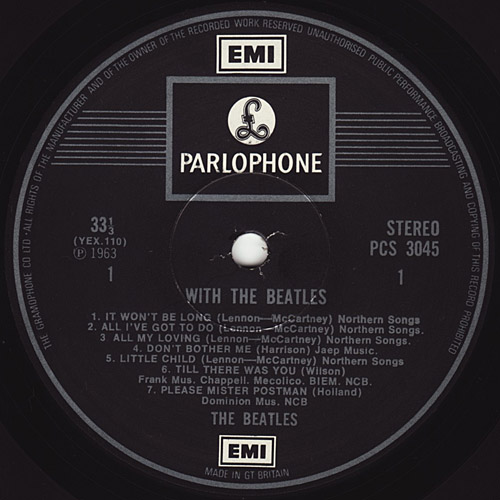 |
Black/white Parlophone label with silver print Type-2: This second label, dating from mid-to-late 1970, is identical but with two "EMI" marks, which are white with black print (reversed). No mono LPs were pressed from the 1970 "two-marks" series with the GRAMOPHONE outer rim. |
| NONE | 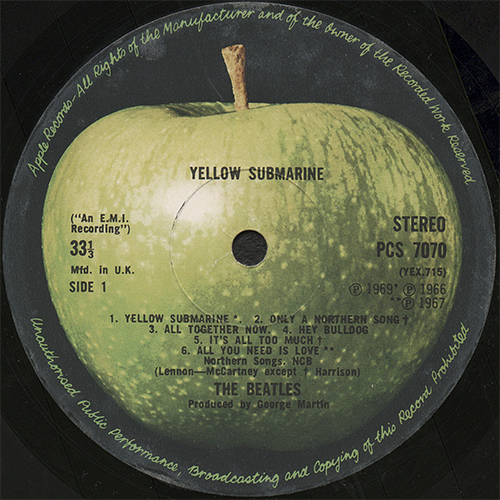 |
Apple label Type-5: The 5th pressing has a light green apple with "("An E.M.I. Recording")", without "Sold in U.K ..." label text located on the left. Released in stereo only. |
||
| 1970s |
|
NONE |
 |
Black/white Parlophone label with silver print Type-3: This third label has two "EMI" marks, which are white with black print (reversed). The record company's name around the label changed from "Gramophone" to "EMI". No mono LPs were pressed from the 1970 "two-marks" series. |
| NONE | |
Apple label Type-5: | ||
| 1970s during "Oil Crisis" |
|
NONE | 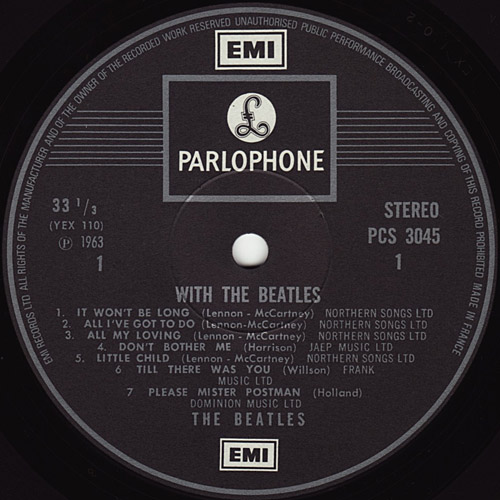 |
Black/white Parlophone label with silver print Type-4: This 4th label has two "EMI" marks, which are white with black print (reversed). At some point in the mid-1970s the EMI pressing plant at Hayes (just outside London) was closed for refurbishment and EMI contracted their Pathé Marconi subsidiary in France to press LP's for a short time. These LP's were then put into U.K. sleeves and sold in the U.K. No mono LPs were pressed from the 1970 "two-marks" series. |
| NONE | 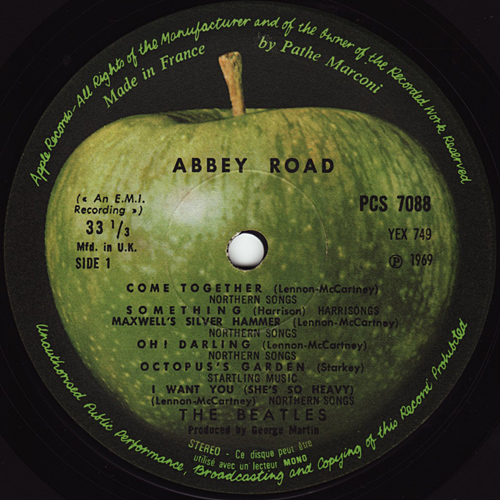 |
Apple label Type-6: These labels were pressed in France during the "Oil Crisis" in the 1970s. The font is different, but the layout is similar to the U.K. pressings. |
||
| 1981 -- late 1982? |
|
NONE | 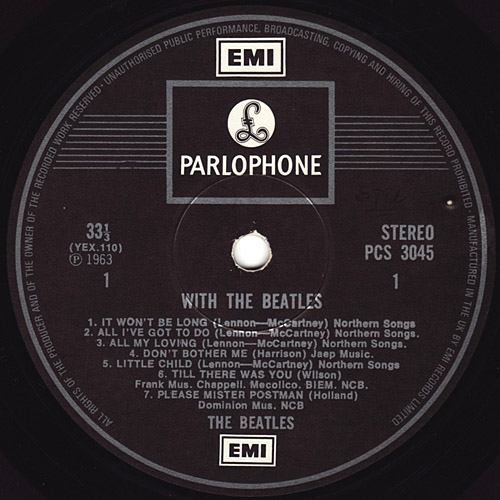 |
Black/white Parlophone label with silver print Type-5: This 5th label has two "EMI" marks, which are white with black print (reversed). These labels have a credit "ALL RIGHTS....MANUFACTURED IN THE UK BY EMI RECORDS LIMITED" around the label and they must come without the word "RENTING" in the circle credit. |
| NONE | 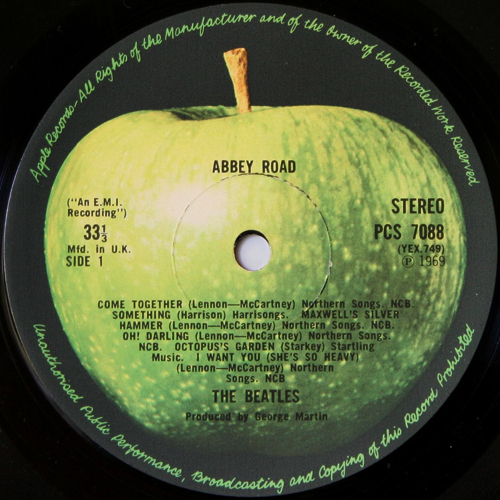 |
Apple label Type-5 ?: | ||
| 1981 |
|
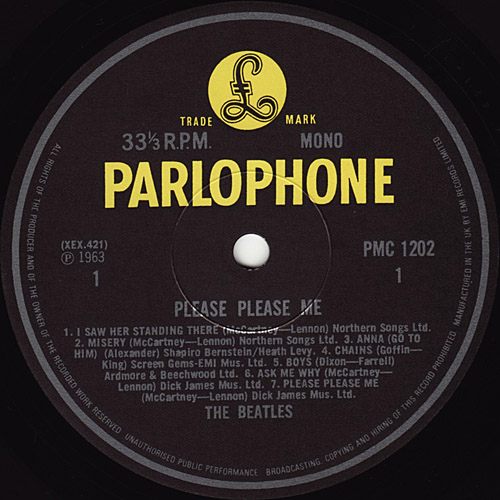 |
NONE | Black/yellow Parlophone label with silver print Type-8: These were reissue labels from 1981. No stereo LPs were pressed for this issue. These labels have a credit "ALL RIGHTS....MANUFACTURED IN THE UK BY EMI RECORDS LIMITED" around the label and a "MONO" credit on the right upper portion. |
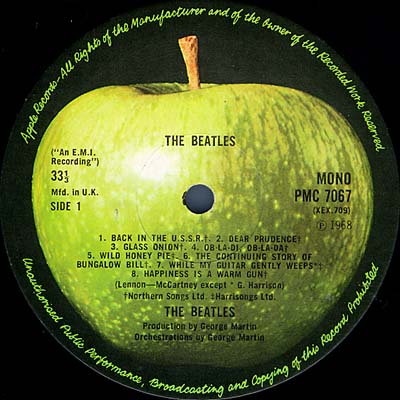 |
NONE | Apple label Type-7: These were reissue labels from 1981. No stereo LPs were pressed for this issue. The characteristics of the reissued label are: 1) "MONO" credit on the right upper portion 2) slender Sans Serif font 3) a credit "An E.M.I. Recording" in parentheses 4) "Harrisongs Ltd" printed as the music publishing company's name for George's songs and "Startling Mus" printed for Ringo's songs. |
||
| late 1982 or 1983?-- 1987? |
|
NONE | 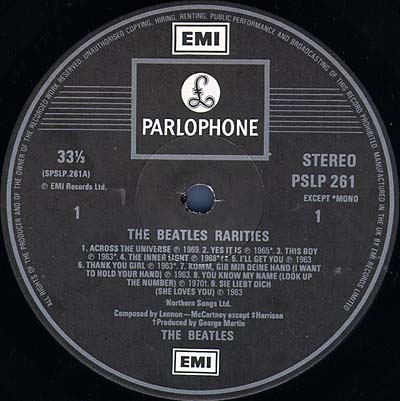 |
Black/white Parlophone label with silver print Type-6: This 6th label has two "EMI" marks, which are white with black print (reversed). These labels may look almost the same as the previous type, but this version includes the word "RENTING" in the circle credit. |
| NONE |
 |
Apple label Type-8: These labels may look almost the same as the previous type, but the only difference is the credit around the label. It was changed in the early 1980s to update the text to "Unauthorized copying, hiring, renting, public performance and broadcasting" are prohibited. |
||
| 1988?-- |
|
NONE | 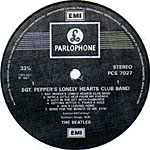 Sorry, I don't have this label. |
Black Parlophone label with silver print Type-7: This 7th label has two "EMI" marks, which are silver print (reversed). The three main characteristics of this label are: 1) Printed in silver ink only, without using white. 2) The silver circle around the label was removed. 3) The text at the perimeter of the label was changed:
|
| NONE | 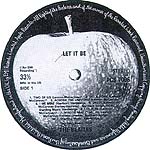 Sorry, I don't have this label. Sorry, I don't have this label. |
Apple label Type-9: This label was published in 1988 when E.M.I did CD remix. The label looks almost the same as the previous type, but it's different. 1) The font was changed to a slightly thicker one. 2) The credits on the left side were changed: |
||
 ...Back to Parlophone Label Guide page